
Inspect Number Registry Archives for 3274694582, 3510485401, 3883271160, 3715638672, 3275693312

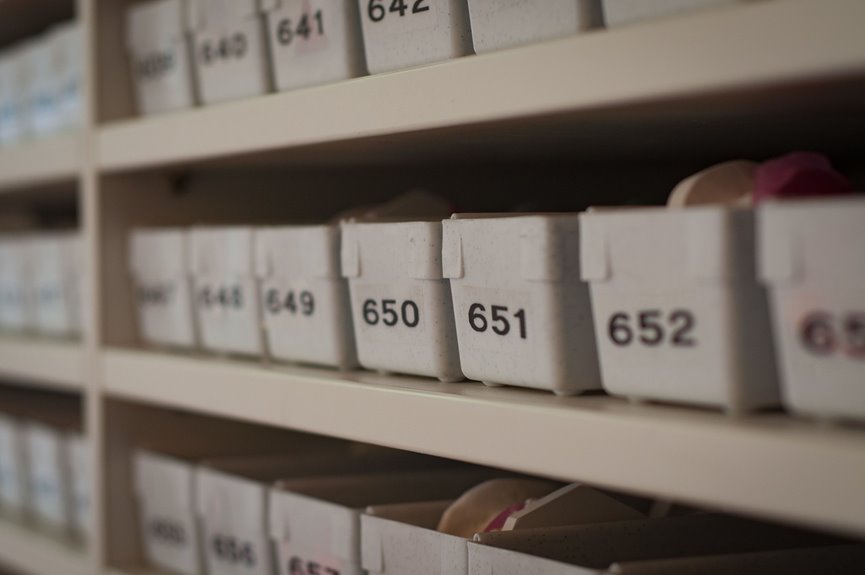
The task begins with a methodical review of five registry entries: 3274694582, 3510485401, 3883271160, 3715638672, and 3275693312. The approach centers on metadata alignment, timestamp parity, and field definitions to establish a common reference. Deviations are documented with reproducible steps. A crosswalk of related IDs is constructed to trace provenance through archival records, maintaining an objective, evidence-based stance. The findings point to directional clues that invite careful continuation and verification.
What the Five Numbers Reveal About Registry History
The five numbers—3274694582, 3510485401, 3883271160, 3715638672, and 3275693312—serve as distinct entries within the registry archive, each encoding a unique timestamp or identifier associated with its corresponding record.
This analysis of data integrity, registry footprints analysis, and migration clues frames a precise, metadata-driven narrative.
Comparisons illuminate structure, enabling freedom-oriented assessment without speculative embellishment.
How to Compare Metadata Across Registry Footprints
To compare metadata across registry footprints, one begins by aligning timestamps, identifiers, and field definitions to establish a common frame of reference and detect inconsistencies. The procedure emphasizes disciplined documentation, reproducible steps, and cataloged variations. Analytical emphasis rests on analysis methods and metadata patterns, revealing structured deviations. This archival approach supports informed interpretation while preserving operational clarity for readers seeking freedom from ambiguity.
Tracing Data Integrity and Migration Clues From IDS
Tracing data integrity and migration clues from IDS requires a structured, evidence-based approach that isolates indicators of transfer accuracy, lineage, and transformation. The analysis remains detached, focusing on registry footprints and metadata comparison to reveal patterns, ensure traceability, and document changes. Data integrity checks, migration clues, and archival records support objective assessment without speculative interpretation or narrative embellishment.
Practical Steps to Investigate Similar Registry Numbers
This section outlines a methodical approach to examining registry numbers that resemble the provided set, emphasizing reproducible steps, verifiable sources, and documented outcomes. Employ Investigative heuristics to identify patterns, verify anomalies, and log decisions. Construct Registry crosswalks mapping related entries, ensuring traceable provenance, repeatable tests, and accountable conclusions for future reference.
Conclusion
In this detached, archival mode, the five identifiers are mapped against a fixed reference frame, revealing a disciplined pattern of alignment and deviation. Metadata crosswalks expose where timestamps, IDs, and field definitions diverge, while provenance traces illuminate migration cues. The assessment remains objective: log entries, document steps, and preserve reproducibility. The conclusion underscores rigor over conjecture, showing data integrity hinges on traceable lineage and disciplined documentation, with deviations serving as verifiable footprints rather than speculative gaps.