
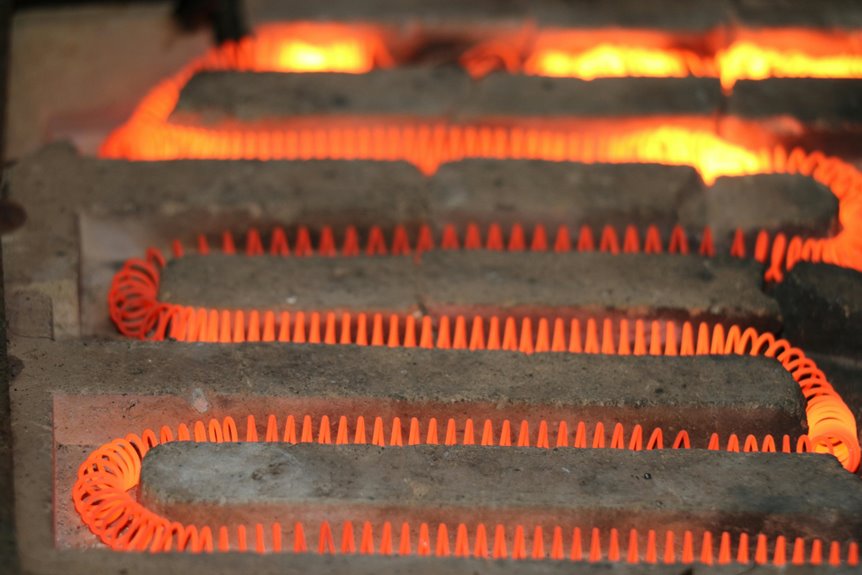
The Energy Technology Curiosity Hub investigates how heat emission reveals efficiency gaps across systems. It surveys measurement methods, from thermography to heat flux analysis, and assesses data integrity and repeatability. The approach emphasizes standardized protocols and cross-sector benchmarking to translate findings into safer, greener designs. By tracing related searches in infrared, materials, and design trends, it highlights where practice diverges from optimum performance. The implications imply concrete, actionable improvements that await verification.
What Heat Emission Tells Us About Energy Efficiency
Heat emission serves as a direct indicator of energy efficiency by revealing how much input energy is wasted as non-useful heat. The analysis examines losses, identifying where design and operation diverge from optimum performance. Metrics quantify waste, while comparative benchmarks expose relative performance. Clear interpretation supports informed decisions about efficiency improvements, signaling the practical relationship between heat emission and overall energy efficiency.
Tools and Techniques for Measuring Heat Emission
Measuring heat emission relies on a combination of sensor technologies, data acquisition systems, and standardized protocols to quantify where and how energy is lost. Tools include calibrated thermography, infrared sensing, and heat flux meters, complemented by robust data processing. Heat metrics emerge from careful cross-validation, contextual benchmarking, and repeatable methodologies, enabling objective assessment of residential, industrial, and infrastructure energy performance.
Decoding Related Searches: Trends in Infrared, Materials, and Design
This analysis examines evolving search patterns related to infrared thermography, material properties, and design strategies, highlighting how user queries reflect practical priorities in energy efficiency research. The review evaluates infrared sensors capabilities, trends in material cooling, and design implications, noting how demand shifts influence methodological choices. Findings imply targeted optimization opportunities across imaging accuracy, thermal management, and user-centered tooling.
Applying Insights: Designing Safer, Greener Systems
What design choices best translate energy-technology insights into safer, greener systems, and how can this translation be verified? The analysis evaluates modular architectures, robust safety margins, and lifecycle assessments. Emphasis on innovative insulation and sustainable cooling informs material selection, energy thresholds, and performance verification. Results support scalable deployment, measurable risk reduction, and transparent compliance, balancing freedom of innovation with disciplined engineering standards.
Conclusion
In a quiet, numeric forest, heat whispers its secrets to patient observers. The hub acts as a meticulous cartographer, tracing invisible trails of waste and opportunity. Each scan, metric, and benchmark is a compass point, steering designers toward safer, greener paths. When performances diverge from ideal, the map redraws, revealing where insulation thins, where currents falter, where materials remember their limits. With disciplined measurement as lantern, energy systems walk toward greater truth and efficiency.