For years, two way radios carried a reputation that felt frozen in time.
People associated them with construction sites, campground counselors, warehouse supervisors, and the occasional security guard pacing outside a concert venue looking mildly stressed. Useful? Sure. Exciting? Not exactly.
Then smartphones took over communication completely.
Or at least that’s what everyone assumed.
But something unexpected happened along the way: smartphones became overloaded with distractions, unreliable during emergencies, and strangely inefficient at the one thing people actually need most during high-pressure situations, instant communication.
That’s where LTE technology quietly changed the future of two way radios.
And honestly, most people still don’t realize how dramatically these devices evolved.
The Original Problem With Traditional Radios
Classic two way radios always had one unavoidable weakness:
Range limitations.
You could communicate instantly, but only within a certain distance. Once someone moved too far away, or wandered behind buildings, mountains, forests, or basically any inconvenient piece of geography, the signal weakened fast.
Everyone who used old-school radios remembers the experience:
“Do you copy?”
loud static
“Say again?”
more static
“Forget it.”
Not ideal.
Traditional systems also depended heavily on radio frequencies, repeaters, and dedicated infrastructure that worked well for localized operations but became difficult for broader communication needs.
That limitation kept two way radios confined mostly to niche professional environments for decades.
Then LTE arrived and completely rewrote the rules.
LTE Technology Changed Everything
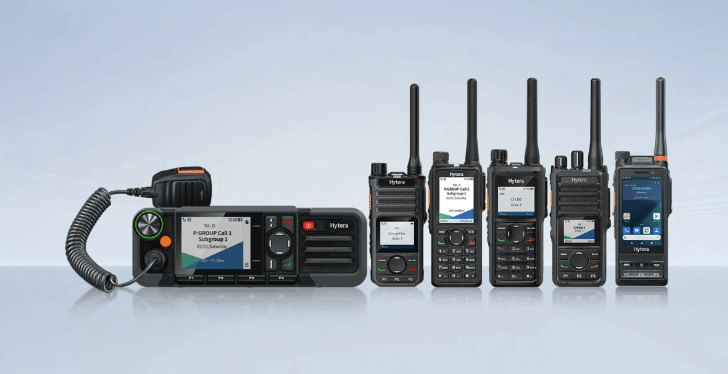
Modern LTE-enabled two way radios no longer rely entirely on direct radio frequencies to function.
Instead, many now use existing cellular infrastructure to transmit push-to-talk communication across enormous distances. As long as cellular coverage exists, users can often communicate nationwide without depending on traditional short-range radio towers.
That shift transformed two way radios from localized communication tools into scalable, long-distance systems suitable for everyday use.
And the practical applications exploded almost immediately.
Families traveling across multiple states can stay connected instantly. Event crews can coordinate across large venues. Security teams can communicate between remote sites. RV travelers, road-trip groups, emergency response teams, outdoor communities, and mobile workforces suddenly gained communication systems that combined simplicity with long-range functionality.
All without requiring complicated phone calls or endless messaging threads.
You push a button. You speak. The message arrives.
Simple systems survive because they reduce friction.
Modern Consumers Are Exhausted by Communication Overload
This part matters more than people think.
Smartphones technically allow constant communication. In reality, they also bury communication beneath layers of digital noise.
Notifications never stop:
- Emails
- Social media alerts
- App reminders
- Group chats
- Calendar notifications
- Promotional messages
- Software updates
- Random apps demanding attention for absolutely no reason
Important communication gets lost constantly.
That’s one reason LTE-based two way radios feel strangely refreshing in 2026. They remove distractions almost entirely. Users communicate directly without navigating apps, typing messages, unlocking screens, or getting pulled into unrelated digital chaos.
There’s no doomscrolling on a two way radio.
No accidentally opening a video app and forgetting why you picked up the device in the first place.
Just communication.
Honestly, that simplicity feels almost luxurious now.
See also: Business Contact Discovery Hub Traveltweaks Phone Number Revealing Company Contact Searches
LTE Radios Are No Longer Just for Industrial Work
A decade ago, most consumers would never have considered owning professional-grade two way radios.
That changed quickly.
Today, LTE-enabled systems are increasingly popular among:
- Families
- Road-trip groups
- RV travelers
- Outdoor enthusiasts
- Event organizers
- Warehouse teams
- Security operations
- Remote workers
- Property managers
- Preparedness communities
Why?
Because communication reliability suddenly matters again.
Natural disasters, overloaded mobile networks, severe weather events, and infrastructure failures reminded people that smartphones are powerful, but not infallible. When traditional communication systems become congested or unreliable, dedicated push-to-talk communication offers valuable redundancy.
According to the Federal Communications Commission, resilient communication systems remain critical during emergencies and infrastructure disruptions. Backup communication methods improve coordination when traditional mobile usage patterns become unreliable under stress.
Consumers have started paying attention to that reality much more seriously.
Range Anxiety Is Basically Gone
Traditional radio marketing always made bold range claims that collapsed the moment real-world conditions appeared.
“Up to 40 miles!”
Sure. Assuming you’re standing alone in a perfectly flat desert while holding the radio toward the heavens like you’re summoning satellite approval.
LTE fundamentally changes that experience because communication travels through cellular infrastructure rather than relying solely on direct radio-to-radio transmission.
That means users can often maintain communication across:
- Cities
- States
- Long-distance travel routes
- Large event venues
- Distributed workforces
As long as network coverage exists, communication continues.
That’s a completely different category of usability from traditional short-range walkie-talkies.
Battery Life and Reliability Still Matter
One thing modern LTE-based radios didn’t sacrifice is operational reliability.
Unlike smartphones, which somehow lose half their battery life because you opened the weather app twice, many dedicated two way radios are optimized specifically for communication efficiency.
That matters enormously during:
- Long road trips
- Outdoor recreation
- Emergency preparedness
- Security operations
- Multi-day events
- Power outages
- Remote travel
Devices designed primarily for push-to-talk communication generally consume less power than smartphones juggling dozens of apps simultaneously in the background.
And honestly, people are getting tired of charging everything constantly.
Preparedness Culture Is Fueling Demand
The resurgence of two way radios also reflects a larger cultural shift.
Preparedness is no longer viewed as extreme behavior reserved exclusively for survivalists living in remote cabins. Ordinary consumers increasingly recognize the value of backup systems for communication, transportation, power, and safety.
LTE-enabled radios fit naturally into that mindset because they provide:
- Direct communication
- Group coordination
- Reduced dependency on smartphones
- Long-range connectivity
- Reliable emergency communication
And unlike many complicated emergency tools, they’re actually easy to use under stress.
That simplicity becomes incredibly valuable during real emergencies when cognitive overload kicks in and nobody wants to troubleshoot complicated apps or network settings.
Consumers exploring modern LTE-enabled push-to-talk systems and nationwide communication tools can learn more through resources focused on long-range communication reliability and accessibility.
The Future of Communication Looks Surprisingly Simple
That may be the most interesting lesson in all of this.
For years, communication technology focused on adding more features, more complexity, and more layers between people. LTE-enabled two way radios became successful by doing almost the opposite.
They simplified communication again.
Fast access. Clear voice contact. Minimal distractions. Reliable coordination.
And in a world increasingly overloaded with digital noise, that simplicity suddenly feels incredibly modern.
Turns out the future of communication might involve fewer apps and more clarity.
One button at a time.