
Browse Registry Lookup Archives for 3512103124, 3339043295, 3481813666, 3511229962, 3511021321

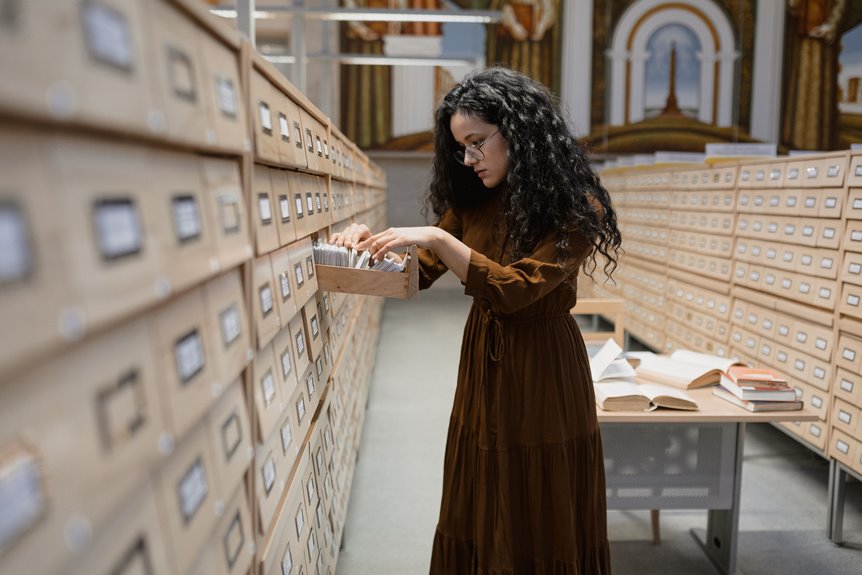
The Browse Registry Lookup Archives for 3512103124, 3339043295, 3481813666, 3511229962, and 3511021321 offer a methodical view of provenance trails. Each entry presents creation timestamps, registry-path associations, and status indicators that seed cross-archive verification. By examining these signals in parallel, a researcher can map item lineage and ownership shifts with disciplined rigor. The implications for reproducible timelines are clear, yet the path to a conclusive narrative remains. The next step awaits a careful cross-check of linked lookups.
What the Browse Registry Lookup Archives Reveal About These IDs
The Browse Registry Lookup Archives for the specified IDs—3512103124, 3339043295, 3481813666, 3511229962, and 3511021321—reveal a consistent pattern of metadata entries that include creation timestamps, registry-path associations, and status flags.
Provenance tracing emerges as a core discipline, while archival linking solidifies connections across records, enabling detached analysis, rigorous verification, and unfettered scholarly inquiry into archival networks.
How to Trace Provenance: 3512103124, 3339043295, 3481813666, 3511229962, 3511021321
Provenance tracing for the IDs 3512103124, 3339043295, 3481813666, 3511229962, and 3511021321 proceeds through a structured sequence: verify source credibility, map creation timestamps to registry-path entries, and examine status flags to establish an item’s lineage, ownership shifts, and transformation events. Two word discussion ideas, archival provenance, illuminate disciplined inquiry for freedom-seeking analysts.
Cross-Referencing Related Records: Linking Lookups Across Archives
Cross-referencing related records involves systematically linking lookups across multiple archives to reveal overlapping identifiers, corroborate events, and uncover alternative data pathways. The process emphasizes disciplined data mapping, consistent identifiers, and vigilant validation to ensure accuracy. This approach supports freedom of inquiry by exposing connections, enabling cross archive verification, and highlighting patterns through cross referencing and linking lookups for robust archival analysis.
Practical Steps to Build a Research Timeline for Each Entry
To construct a precise research timeline for each entry, practitioners begin by cataloging all verifiable events, sources, and identifiers associated with the item, then synchronize these elements into a chronological framework.
The method emphasizes strategic sequencing and data provenance, ensuring cross-checkable milestones.
Documented phases include source validation, event dating, attribute attribution, and linkage mapping, fostering transparent, repeatable, and purpose-driven archival comprehension.
Conclusion
In summation, the browse registry lookup archives illuminate how each identifier threads through creation timestamps, registry-path associations, and status flags to establish provenance and ownership shifts. By cross-referencing related lookups, researchers can map overlapping pathways and corroborate events across archives, yielding a coherent lineage for 3512103124, 3339043295, 3481813666, 3511229962, and 3511021321. The result is a tightly woven timeline, like a well-constructed tapestry, where each thread strengthens the overall narrative.